
Claire A. Vega
07-08-2021The Management and Staff of D' PAUL Kiddie Center extend their condolences to the family of Head Teacher Claire A. Vega who passed away last Friday, August 6. Our prayers are with you always. Eternal Rest grant unto you, T' Claire. May you rest in the Peace of Our Lord. Amen.

Dr Soibam Ibocha
08-08-2021So sad and grief to hear the untimely demise of Dr. Soibam Ibocha, IPS due to Covid 19. We have lost a very precious jewel of our state... A police officer, a great educationist and a great thinker of our society.. Your space could not be filled by anybody... My condolences to the painful family, friends and relatives.. May you be rest peacefully in the sacred abode of Taibang mapu...

Prof. Chunni Lal Khetrapal
21-07-2021Prof. Chunni Lal Khetrapal (b.1937) breathed his last this morning, July 21, 2021 at Lucknow. A product of Allahabad University, Dr. Khetrapal joined the prestigious Atomic Energy Establishment Training School at Mumbai (1959) and then the Tata Institute of Fundamental Research (TIFR), Mumbai. After PhD, awarded by Bombay University (1965), he researched at a number of institutions abroad such as University of Basel, Switzerland (1967-69); Liquid Crystal Institute, and Kent State University, Kent, USA (1971-72). He joined Raman Research Institute at Bengaluru (1973) as Associate Professor. In the year 1984, he moved as Professor and Head, Sophisticated Instruments Facility at Indian Institute of Science, Bangalore (1984-98). He also worked at NIH, Bethesda, Maryland, USA (1979-80 and 1984). In the year 1998, he was appointed as Vice-Chancellor of the Allahabad University (1998-2001). After that he joined Sanjay Gandhi Post-graduate Institute of Medical Sciences, Lucknow as Distinguished Professor (2001-06); and was founder-Director, Centre of Biomedical Magnetic Resonance, Lucknow. Nuclear Magnetic Resonance (NMR) was the chosen field of research of Prof. Khetrapal. His contributions in NMR have literally opened new avenues of research. Professor Khetrapal was an institution builder and took lead in establishing the first National Centre on NMR in Bangalore and the Centre of Biomedical Magnetic Resonance in Lucknow. At the University of Allahabad, he initiated several new academic programmes and created two institutes and several Centres of Excellence. He has over two hundred and sixty publications to his credit and authored several reviews, books, chapters in books and monographs. Among Professor Khetrapal’s honours and awards are: SS Bhatnagar Prize (1982), RK Asundi Memorial Lecture Award of INSA (1990); President, Physical Sciences and of Chemistry Section of Indian Science Congress (1994); CV Raman Award of UGC (1996); Goyal Prize (1996); JC Ghosh Lecture Award of Indian Chemical Society (1998); PC Ray Memorial Medal of the Indian Science Congress Association (2002); Life time Achievement Award of the Indian Chemical Society (2005) and NR Dhar Memorial Lecture Award of National Academy of Sciences (India), Allahabad (2005). He was a Member of International Council of Magnetic Resonance in Biological Systems (1984-94) and of Governing Council, the International Society of Magnetic Resonance (1986-95). He was the Founder-President of the National Magnetic Resonance Society. He was a member of the International Editorial Board of prestigious series of publications in NMR. In addition to INSA, he was Fellow of the National Academy of Sciences at Prayag ((also its Vice-President, 1999-2000). He was serving on the INSA Sectional Committee-III His demise is a big loss to the scientific community. INSA family deeply mourns the loss and conveys heart-felt condolences to his family. (Pic by courtesy Prof. Dr. Alok Dhawan)

Arun Dey
02-08-2021Deeply pained to learn about the demise of veteran politician and former Five-Time MLA from Balasore Sadar Assembly Constituency Arun Dey. My condolences to his friends, family and supporters in this hour of grief. May the departed soul Rest in Peace. Om Shanti????

Martam Rumtek
04-07-2021#Condolences It's was sad, sorrow, dismay to heard the Death of our hardworking SKM Krantikari of our 24 Martam Rumtek Concituency Late Shri Durga Chettri R/O Namli 32 no ,we have lost the hardcore Krantikari, he dedicated his life to safe the people's with good heart. On behalf of SKM 24 Martam Rumtek family, we are so heartbroken and dismay, we are standing and Mourned with departed soul and his family. It's was God Plan, there is nothing we could do, we just need to put God in Pray to help us in that hard situation, we had been experiencing in death row. May his soul rest in Peace. SKM 24 Martam Rumtek Family. ????

Bobby Bowden
08-08-2021The Billy Graham Library expresses its condolences to the family of Coach Bobby Bowden. Over the years, Coach Bowden spoke at two Billy Graham Crusades and Billy Graham also went to Tallahassee to spend time with the coach in his office at Florida State University and to speak to the players. Bowden once said of Billy Graham, “He affected me more, spiritually, than anyone in my whole life, other than my own father. He is a hero to me. He is the most godly man I have ever known."
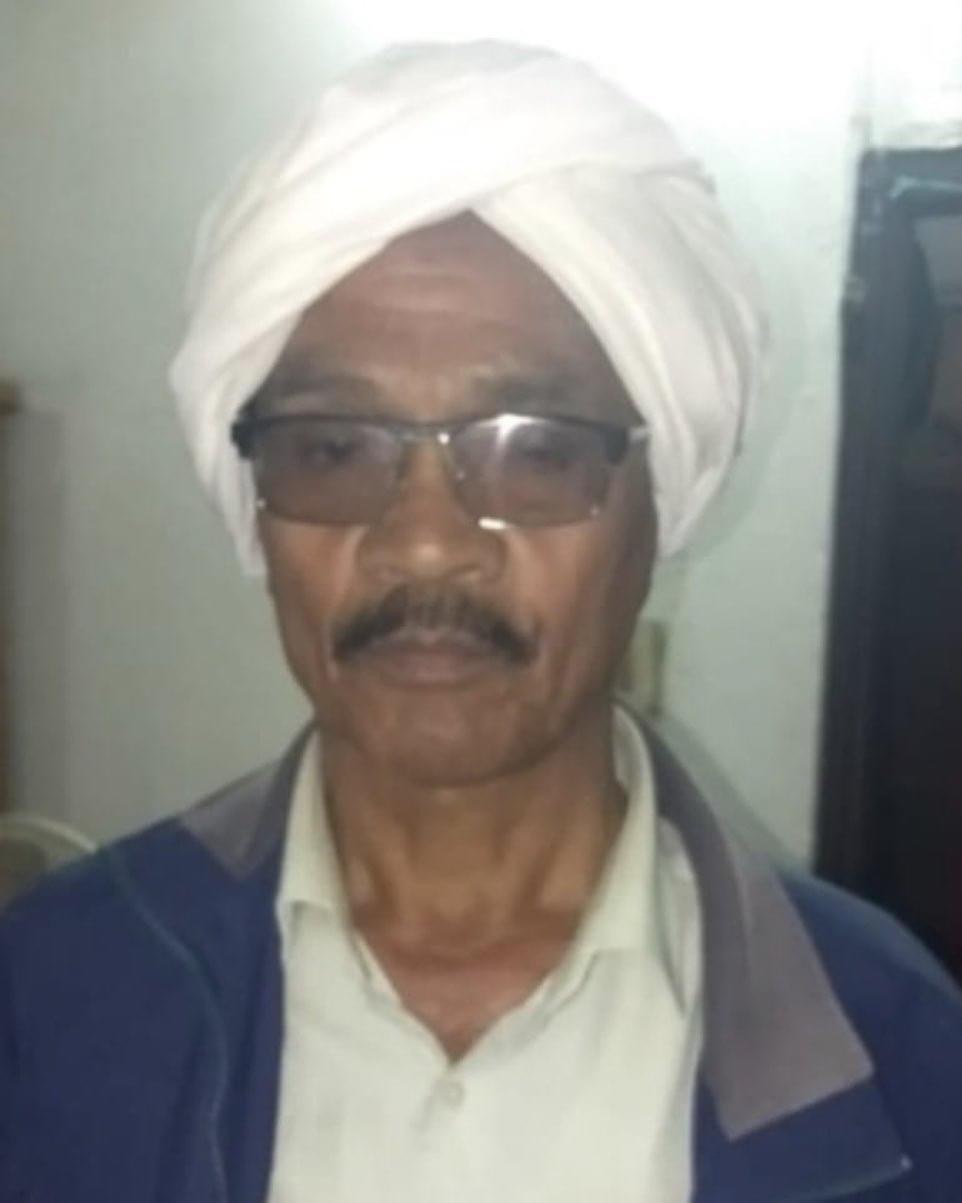
Ma sutnga
11-07-2021With profound shock and a sense of deep loss, I am saddened to hear the news of passing away of the Daloi of Elaka Sutnga , Ma Erudith Sutnga. Ma Sutnga left for heavenly abode this morning. I extend my deepest condolences to his family and all his loved ones. May his soul rest in eternal peace.
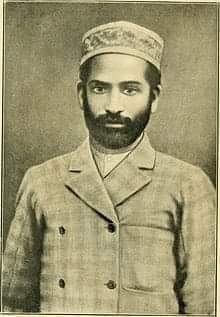
Pandit Gurudatta vidyarthi
26-04-2021A Biographical sketch of Pandit Gurudatta vidyarthi Today is Birth Anniversary of Pandit Gurudutt Vidyarthi Pt Chamupati “Pandit Gurudatta Vidyarthi is recognized to have been the greatest achievement of Rishi Dayananda for his ancient Aryan church. The dying glance of the Rishi had miraculously transformed the mettle which was there in the young intrepid scholar. Had not death cut short his scholastic career so early, the Arya Samaj and through it the whole world of religious and metaphysical though may have been considerably enriched by his erudite philosophic contributions, of which the few dissertations and brief discourse he could, in the midst of his manifold activities, find time to write, gave sure promise. An unmistakable vein of sincere love of truth for which no sacrifice of personal glory and earthly possession and comfort was too great, runs through them all. This marks Gurudatta out as a genuine philosopher, whose craving for spiritual light was not simply intellectual, it was the innermost call of his disconsolate soul. He it was who recognized in the last glance of Rishi Dayananda the soul of a seer, anxious to save a money-mad world from the dismal abyss of gross materialism, to guide it away by the help of the eternal light of the Veda to the empyrean heights of Spiritual Bliss. In that departing glance he read a message, a command to take up the challenge which the asuri demonical, forces of Mammon were throwing out to the ancient diava, divine, culture of the Rishis. The young boy of nineteen took the challenge up, and coming of a warlike race fought to the last on the side of truth and righteousness. His was the death of a hero who, like another young boy whom Muse glorifies as having died on the station of his duty in another sphere. Pandit Gurudatta was the last male child of Lala Radhakishen Sardana of Multan, whose ancestors had distinguished themselves in the field both, of letters and arms. He was born on 26th April 1864. His grandfather was the ambassador of Nawab of Bahawalpur in the court of the Amir of Kabul. From him he inherited an aptitude from Persian which by a little training in the primary classes gave him a working mastery of that language so that he could in his boyhood dip into the deepest waters of the Persian literature. He conceived a fondness for Samskrita too in his schooldays. And the first book that after his study of the Samskrita Priimer fell into the young boy’s hands was the Rig Vedadi Bhashya Bhumika of Swami Dayananda. He forthwith approached the authorities of Arya Samaj at Multan and challenged then to either make arrangements for his study of the Ashtadhyayi and the Vedas or accept that the scriptures for which they claimed infallibility were only trash. The alternatives proposed appear to us to be an index to his sinner nature. In his heart of hearts he was convinced of the intellectual and spiritual worth of the Vedas, an introduction to which by the Rishi of the time he had already read. It was his impatience, and irresistible zeal to read more which prompted him to the blasphemous insinuation that the Vedas could, if the were not taught him, be regarded as trash. The Multan Arya Samaj engaged a Pandit who found it beyond his learning and pedagogic capacity to satisfy the little Vidyarthi. The Vidyarthi solved his own puzzles of Grammar and the Vedas, and though the arrangement made by the Samaj was not satisfactory, he did not regard the Vedas as trash. In 1881 he martriculated. It was this year that he got himself registered in the Arya Samaj as member. In 1883 he undergraduated. He had in the interim founded a Free Debating Club, where profound philosophical questions used to be discussed. Gurudatta was snow passing through that period of his life when the mind of a young man is yet in a fluid state. The college days of mental and spiritual intractability. The supreme authority to a college-boy is his own virgin opinion. In those days, if ever, liberty of thought holds an absolute way over man’s mentality. The age of greatest impressionability is also the age of greatest intractability. Everyday and every hour new opinions are borrowed. Every new thought however has during the regime its suzerainty absolute. Pandit Gurudatta’s progress in grasping and assimilating ideas and facts was tremendously rapid. Somehow he acquired the notoriety of being an atheist. Those who had the occasion to live close to him bear witness to a strong skeptic disposition in him, which to them was a mark of an intensely inquisitive frame of mind. Gurudatta, even when some thought he was an atheist, continued a staunch Arya Samajist. And when the news was received of Rishi Dayananda’s illness at Ajmer, the Arya Samaj at Lahore deputed Lala Kivan Das and Gurudatta to go and tend him. The resources of the Arya Samaja appear to have been very poor at the time so that the choice for an errand of such importance and responsibility could fall on a lad of nineteen. To Gurudatta the occasion afforded an opportunity of his first and last darshana of his beloved Rishi. He saw the Rishi Dying. Not a word passed between the Master and his devotee, but Gurudatta’s whole nature had in the meantime silently taken a turn. When he returned to Lahore, he was evidently a changed man. His former frivolity, his impatience, his skepticism had in an instant left him. The zeal was there, but now it was wedded to seriousness. Somehow the feeling had dawned on Gurudatta that the Rishi had by his last glance let his mantle drop on his shoulders. To others the privileges of succession, to Gurudutta were passed the obligations of the Rishis mission. In 1885 he graduated and in 1886 he passed his M.A. His subject was Physical Science. The position secured by him in the pass list remains yet a record in the University which no succeeding candidate has yet surpassed. In the meantime Gurudatta had been touring the Punjab attending anniversaries of Arya Samajis. He had been busy reading the scriptures and books on philosophy and religion both eastern and western. For two years he was acting Professor at the Government College where his deep erudition and pedagogic capability met with high and well-merited appreciation. The movement to found a college in memory of Rishi Dayananda had, since the death of the Sage, been launched by the guiding spirits of the Arya Samaj. Gurudatta threw himself heart and soul into the campaign to collect funds for that, to him a sacred institution. The speeches he delivered on behalf of the cause were recognized as wonderful specimens of erudition and oratory. The D.A.V. College of Pandit Gurudatta’s dream was an institution where Brahmacharya would be the dominant factor in life of the students and ancient Shastras the primary study in the curriculum of the academy. He was yet living when under the influence of the University the D.A.V. college was given its present shape and character. He expressed strong dissatisfaction with his disagreement with its then conductors as regards there educational policy. In the short period of six years after he had seen the Rishi he had acquired marvelous master of sacred books of Samskrita. A treatise by him entitled “The Terminology of the Vedas” was included in the course of Samskrita for the degree examination at Oxford. His translation of a few of the Upanishads, when after his death copies of it were sent to America on the occasion of the Parliament of Religions held in Chicago in 1896, won such appreciation that an American edition of it was published by an American publisher, of his own accord. Gurudatta spoke for hours in Samskrita, which feat won him the title ‘Pandit’ which sticks still to his name. He in his humility styled himself Vidyarthi, while those who heard him styled him Pandit. This was true Brahmni spirit which marked Gurudatta throughout his career. To his Ashtadhyayi class came some old men, among them an E.A.C who had taken leave for the sole object of reading Grammar with Gurudatta. A young man of only twenty-six, attracting pupils of all ages, and making such stir among the populace recalled scenes from the hoary history of Bharata Varasha of the time of Janaka and Yajanvalkya. The strain on the nerves of Gurudatta had been great. He had tried to compress within three years what normally should have taken a life-time to accomplish. He had amassed a great deal of learning, so that in his time he well-nigh became an authority on the true meaning of scriptures. But his ceaseless assiduity had cost him his health. During his school days Gurudatta had been fond of physical exercise: His physique was strong, but his mental labor had of late been great, so that in 1889 he fell victim to consumption, and finding it impossible even then to rest, succumbed to the dire disease in March 1890. he was advised by doctors to take meat, which would uphold him in his weakness. But the smiling answer of the Vidyarthi was:- “Will meat make me immortal? Will it make me death-proof ever after? If not, why for a chance of saving one’s own life bring about certain death of another? During the night in which Pt. Gurudatta died Ish-Upanishad had at his request been repeated recited to him. His references to incidents in Rishi Dayananda’s life had always formed a pathetic portion of his speeches. People had therefore urged him to write a biography of the Swami, which the Pandit had gladly consented to do so. When the Pandit was on the point of death somebody asked where his manuscript of the biography was. The Pandit characteristically replied, ”I have been trying conscientiously to record the life-account of my Rishi not on paper, not in ink, but in my own day-to-day life. It was my ambition to live Dayananda. My body, alas! Has failed me. I lay it down, gladly in the hope that the next vehicle will be more in conformity with the aspirations of the soul.” To us a thread appears to run through the variegated phases of Gurudatta’s life. He was a heroic soul, passionately zealous, impatiently inquisitive, conscientious and inordinately sincere and true. He believed in the Vedas and yet in his zeal to be able to read more of them declared his readiness to denounce them as trash.He believed in God and yet in his zeal to understand His nature more thoroughly he argued His existence with himself and others and thus appeared as if he were an atheist. He was born for a mission, and when the last glance of the Rishi had pointed the path to him, he had, as it were, almost doubled his age, and become grave and thoughtful like a man of fifty. The inability to at once take the place of the Rishi was to him intolerable. He wanted instantly to shake off his physical and mental limitations and at once become a sage. The ambition was great, but in it there was not vestige of self-conceit. He was trying everyday of his life to become Dayananda. To that end he learnt Yoga exercises, and when even these could not bridge the mental and spiritual distance between him and his goal he willingly laid down his life. His was the glory of a martyr to his own tyranny. The day of his death was honored by local colleges and courts being closed for a holiday. The world of letters mourned his loss as the loss of a literary prodigy. The Punjab University was conscious that it has lost its only scholar whose earliest productions has met with recognition at the hands of those who were competent to judge, both in and outside the country. Of the Arya Samaj he was the one hope. The spirit that inspired him has, however lived. It will forever continue inspiring young hearts. O that he had taken better care of his body!

Swami Shraddhanan
23-12-2020Suddhi of The Malkanas Saving The Dying Race Published on 23rd December on the occasion of Swami Shraddhanand Martyrdom Day #SwamiShraddhanand Malkanas Rajputs scattered around Mathura, Farrukhabad were nominally Muslims, but their cultural and rituals were all Hindu practices. There were attempts to restore relations between Malkanas and Hindu Rajputs. On 13 Feb 1923 in Agra swami ji established Bhartiya Hindu Suddhi Sabha of which he was elected president and Lala Hansraj as vice president. Swami Jis appeal for Suddhi appeared in leader dated 23 Feb. 1923 as - The great arya nation is said at the present moment to be a dying race, not only because its numbers are dwindling but because it is completely disorganized. Individually man to man second to no nation on the earth in intellect and physique, possessing a code of morality unapproachable by any other race of humanity, it is still helpless on account of its divisions and selfishness. Lakhs upon lakhs of the best in the race have been obliged to profess Mohammedanism and thousands have been enticed away to accept Christianity without the least effort on the neo-Muslim Brahmans, Vaishyas, Rajputs and Jats have for more than two centuries and more been casting yearning glances and kept their Hindu faith and prejudices intact in the hope of being taken back in the bosom of their brotherhood. A mere chance opened Hindu eyes, The Rajputs Mahasabha announced with a flourish of trumpets that four and a half lakhs Muslim Rajputs were ready for becoming Hindus. After having made this misleading announcement the Rajputs Sabha went to sleep. I call the announcement misleading because an overwhelming majority of them had never become Muslims in faith and practice. The Hindus went to sleep, but the Muslims being a living force were roused to action and scores of their preachers are at work for whose maintenance and propaganda work money is flowing like water. This after all roused the Hindu community also and there is now a cry from all sides for absorbing out strayed brethren in the bosom of the Vedic church, a new Sabha has been organized under the name of the Bhartiya Hindu Suddhi Sabha with the object of reclaiming those who are willing to come back to its fold. Swami Ji in next 2 months marched from village to village claiming thirty thousand Suddhis by the year end. Naturally they became main target of Muslim agitation against Suddhi, a public meeting in Bombay was organized on 18th march 1923 by jamiat-ul-ulama condemning swami ji. Sensational posters appeared in many cities, and rumors spread that Muslims in dress of Hindu sadhus were going about frightening the Malkanas and heaping insults on the swami. Some aryas were afraid of an attack on their leader, and proposed to arrange a bodyguard for the threatened swami. But he refused with the words “param pita (the father on high) is my protection”. In moradabd Swami ji barred from making public speeches and many in other places his addresses were answered by Muslim counter meetings. (Leader 21-26 march, 1923) Various leaders gave their personal opinion on Suddhi but none of them supported swami ji and Hindu Sangthan movement Pt Motilal Nehru said in leader 8th April, 1923 that I would have been glad if the movement had not been started at this juncture when feelings are strained between Hindu and Muslims in the Punjab. Maulana Abul Kalam Azad pointed that individuals had been harassed by Suddhi workers; the swami ji firmly denied their allegations in leader 5th, 6th may 1923. Jawaharlal Nehru in leader 13th may.1923 said that it would have been better for this question not to have been taken up then, and he expressed the wish that all outsiders left the Malkanas in peace for a while and permitted them to work along their own lines. On 31st march the Maharaja of Darbhangha, learned Pundits of Banaras from Bharat Dharma Mahamandal gave their approval to the reclamation of Malkanas Rajputs.(leader 5th April , 1923) Suddhi movement pioneered by Swami Dayanand and Aryasamaj under guidance of Swami Sharddhananda saved millions. Aryasamaj opened the doors who were closed since centuries. This was great service to our Dharma.

Sir Syed’s
02-01-2021The real Sir Syed: A British agent Balbir Punj Sir Syed’s biggest contribution is claimed to be the setting up of Mohammedan Anglo Oriental College (MAO) in 1877, which eventually blossomed into the Aligarh Muslim University (AMU) in 1920. In 1941, Mohammad Ali Jinnah had paid a “handsome tribute” to the AMU students when he described the university as “the arsenal of Pakistan”. Addressing the AMU students on August 31, 1941, Liaquat Ali Khan declared: “We look to you for every kind of ammunition to win the battle of independence of the Muslim nation”. In 1943, Jinnah had called the Khan “my right hand”. For a decade before independence, he was at the centre of all the League’s activities. He was the first Prime Minister of Pakistan. In January, 1941, the AMU students union passed a resolution that “The best way to achieve Indian freedom and to bring about lasting peace in the country is to strive for the establishment of independent states in the regions of Hindu and Muslim majorities”. This divisive AMU mindset has it’s origins in the “rare vision and intellect” of Sir Syed, described by Warsi as “a versatile genius”. Speaking in Meerut in March 1888, Sir Syed laid the outline of a disastrous roadmap leading to the bloody Partition of the country in 1947, and in furthering hostalities between Hindus and Muslims in the sub-continent. Here are excerpts from his speech in which he contemptusly refers to Congressmen as “Bengalis”. “The first of all is this — in whose hands shall the Administration and the Empire of India rest? Now, suppose that all the English and the whole English army were to leave India, taking with them all their cannons and their splendid weapons and everything, then who would be rulers of India? “Is it possible that under these circumstances two nations — the Mohammedans and the Hindus — could sit on the same throne and remain equal in power? Most certainly not. It is necessary that one of them should conquer the other and thrust it down. To hope that both could remain equal is to desire the impossible and the inconceivable. “At the same time, you must remember that although the number of Mohammedans is less than that of the Hindus, and although they contain far fewer people who have received a high English education, yet they must not be considered insignificant or weak. “Probably they would be by themselves enough to maintain their own position. But suppose they were not. Then our Musalman brothers, the Pathans, would come out as a swarm of locusts from their mountain valleys, and make rivers of blood to flow their frontier on the north to the extreme end of Bengal. “This thing — who after the departure of English would be conquerors — would rest on the will of God. But until one nation had conquered the other and made it obedient, peace cannot reign in the land. This conclusion is based on proofs so absolute that no one can deny it. “I believe that the Bengalis (read congressmen/Hindus) have never at any period held sway over a particle of land. They are altogether ignorant of the method by which a foreign race can maintain its rule over other races. Therefore, reflect on the doings of your ancestors, and be not unjust to the British Government to whom God has given the rule of India; and look honestly and see what is necessary for it to do to maintain its Empire and its hold on the country. “You can appreciate these matters, but they cannot who have never held a country in their hands nor won a victory. Oh, my bother Musalmans! I again remained you that you have ruled nations, and have for centuries held different countries in your grasp. For seven hundred years in India you have had imperial sway. You know what it is to rule. Be not unjust to that national which is ruling over you, and think also on this how upright is her rule. “I do not think the Bengali (read Congress) politics is useful for my brother Musalmans. Our Hindu brothers of these provinces are leaving us and are joining the Bengalis. Then we ought to unite with that nation with whom we can unite. “No Mohammedan can say that the English are not ‘people of the Book’ No Mohammedan can deny this: That God has said that no people of other religions can be friends of Mohammedans except the Christians. He who had read the Quran and believes it can know that our nation cannot expect friendship and affection from my other people. (Thou shalt surely find the most violent of all men in enmity against the true believers to be the Jews and the idolaters: And thou shat surely find those among them to be the most inclinable to entertain friendship for the true believers, who say we are Christians, Quran, Chap V)”. This is Sir Syed, spelling out his divisive agenda in his own words. Invoking the holy Quran to ensure loyalty of Indian Muslims to a colonial power. If he is hailed as an icon, is there hope for the country?